TA.XTplus100C

Why should you choose a TA.XTplus100C texture analyzer?

Enhanced capabilties

The TA.XTplus100C retains the benefits of the TA.XTplusC, with the additional capability of utilising forces up to 100kg, along with an improved distance resolution, doubled to 0.0005mm.

This will be of major interest to those (particularly in the pharmaceutical industry) who require fine distance control/measurement of, for example, small granules/beads/particles.

Built for higher force applications

The stiffer structure enables higher force applications – half micron at 20mm/s. The extended height model provides even more testing distance for high force extensional applications. With the TA.XTplus100C you get more capacity for the same laboratory bench space (footprint).

More attachment options

With the TA.XTplus100C you have the ability to use attachments including the Ottawa Cell and Kramer Shear Cell that would usually require the high force capacity of a TA.HDplusC Texture Analyser

Additional measurement options

More location points for the attachment of accessories such as temperature devices, lights, humidity probe, cameras etc.

Got Curious?

Read more news articles and stay up to date on the latest news and events in the world of materials characterization, sample preparation and laboratory automation. From product launches to upcoming webinars, we've got you covered. Don't miss the latest developments - check back often to stay up to date!

Equipment Outlet – search & find

We are clearing out and selling demo devices at low prices, among other things. Maybe there is something for you…

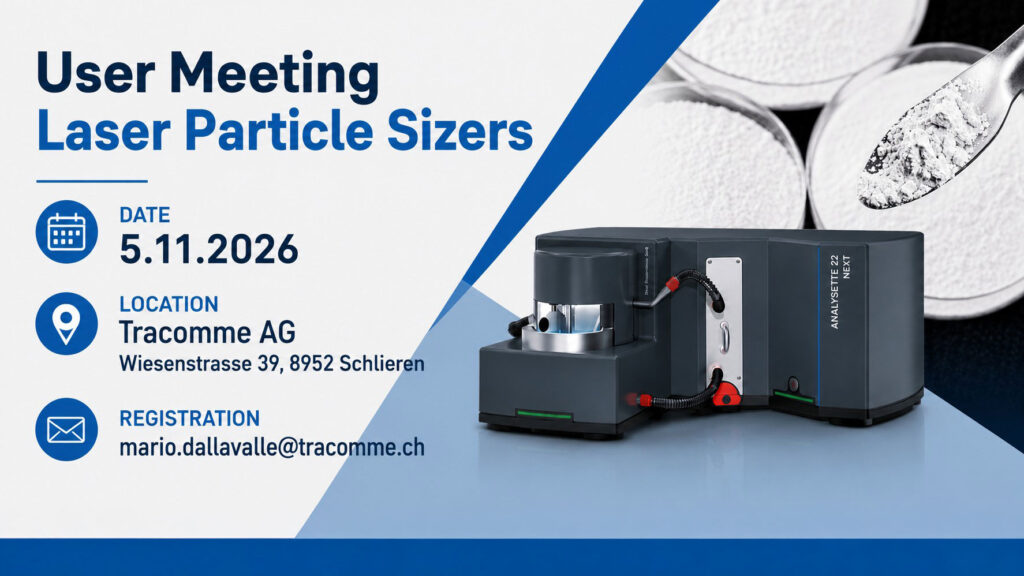
User Meeting on “Laser Particle Measurements”

Are laser particle measurements part of your daily lab routine? In our user seminar “Laser Particle Measurements,” we’ll show you practical ways to get the most out of the Particle Sizer and discuss application topics directly with experts.

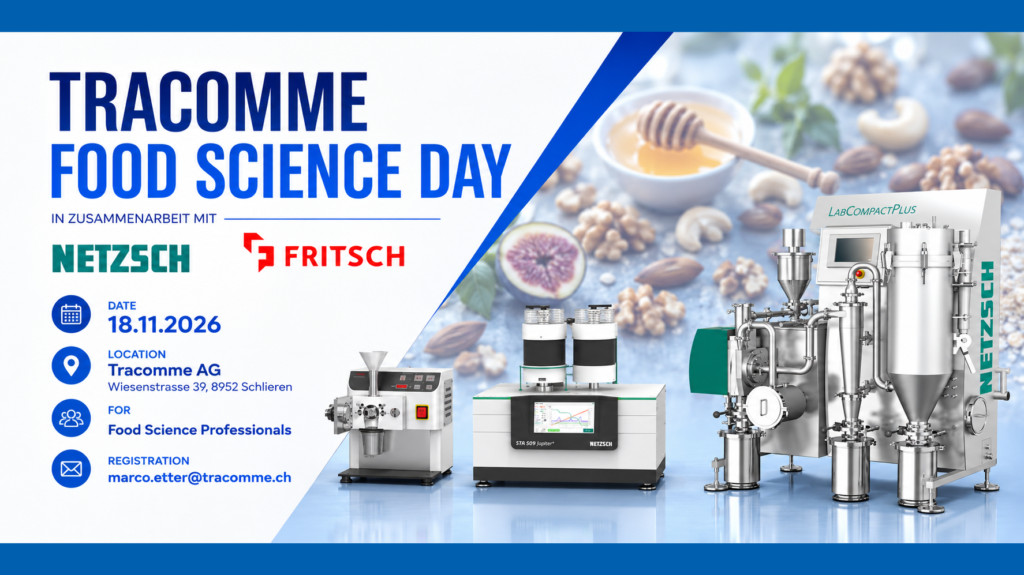
Tracomme Food Science Day – From Structure to Stability

Exclusive insights into modern analytics, process technology and material characterisation for the food industry. How are food’s properties formed? What role do fat, water, proteins and particle structures play – and how can we specifically understand, influence and optimise them?