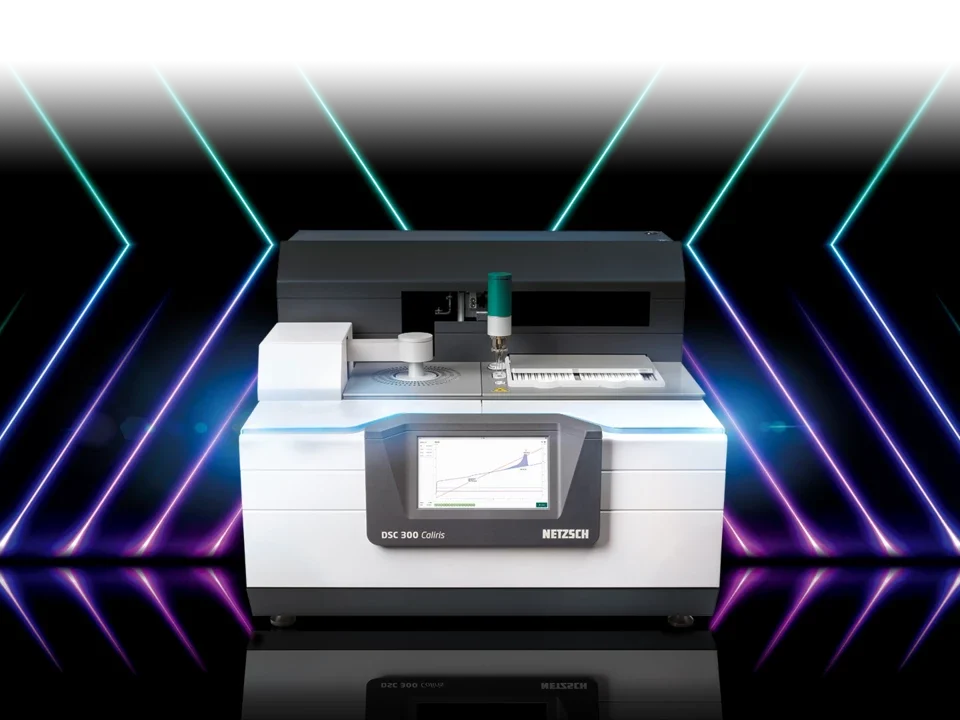
DSC 300 Caliris® Supreme & Select
The DSC 300 Caliris® Is the Most Comprehensive, Most Reliable and Versatile DSC for Material Characterization on the Market.
Modular Design – Maximum Flexibility
Ever-accelerating new material developments, triggered by fast-moving mobility and technical trends, require continuous adaptability. The new generation of NETZSCH DSCs is based on a modular concept. The DSC 300 Caliris® is the only instrument of its kind with interchangeable and exchangeable sensor-furnace modules. The Supreme version of the DSC 300 Caliris® allows the exchange of modules, to be able to adapt to current and future needs.
The DSC 300 Caliris® Supreme – The Future-Proof Choice
This version offers a choice of currently three modules and can be configured to achieve an unrivaled maximum temperature range of -180°C to 750°C.
It is possible to update your device at any time to take advantage of the latest technological developments or to change your application. The choice of the module used remains unrestricted. Just choose between broad temperature range, fast heating rates or high sensitivity as needed.