Home » Competencies » Lab Automation » NIR sensors

NIR sensors

Process control with process sensors – for efficiency gains and cost advantages

Process Sensors supports manufacturers in a wide range of industries—from food and pharmaceuticals to plastics—with precise measurement systems for moisture, fat content, and other relevant parameters in production processes. With more than 30 years of experience in near-infrared (NIR) technology, the company delivers reliable solutions that are used worldwide. The instruments enable fast and accurate analysis of raw materials and ongoing processes, ensuring the quality of the end products at all times. Manufacturers can thus monitor and control important parameters during processing, regardless of the type of product. For customers, this means greater efficiency, reduced production costs, and lower scrap rates. At the same time, the data obtained provides a transparent basis for informed decisions in quality management. Process Sensors thus not only supplies measured values, but also decisive added value for stable processes and consistently high product quality.


Latest News & Events

Stay up to date on the latest news and events in the world of materials characterization, sample preparation, and laboratory automation. From product launches to upcoming webinars, we've got you covered. Don't miss the latest developments - check back often to stay up to date!

Equipment Outlet – search & find

We are clearing out and selling demo devices at low prices, among other things. Maybe there is something for you…

User Meeting on “Laser Particle Measurements”

Are laser particle measurements part of your daily lab routine? In our user seminar “Laser Particle Measurements,” we’ll show you practical ways to get the most out of the Particle Sizer and discuss application topics directly with experts.

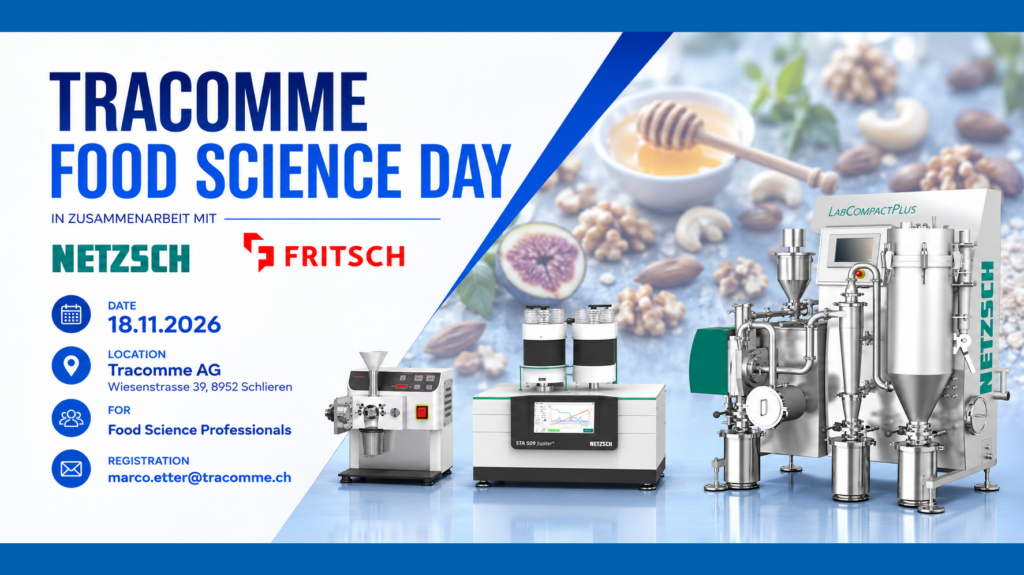
Tracomme Food Science Day – From Structure to Stability

Exclusive insights into modern analytics, process technology and material characterisation for the food industry. How are food’s properties formed? What role do fat, water, proteins and particle structures play – and how can we specifically understand, influence and optimise them?