Dielectric Analysis (DEA)
The functional principle is consistent with that of an impedance measurement. In a typical test, the sample is placed in contact with two electrodes (the dielectric sensor).
For investigation of the curing behavior of thermosetting resin systems, composite materials, adhesives and paints, Dielectric Analysis (DEA) in accordance with ASTM E2038 or E2039 has stood the test of time.
The great advantage of DEA is that it can be employed not only on a laboratory scale, but also in the plastic production process. Integrated into the mold, dielectric sensors measure crucial material properties to monitor and predict part quality.
Together with the sensXPERT® solution, a reduction in scrap and an increase in efficiency and transparency can be achieved.
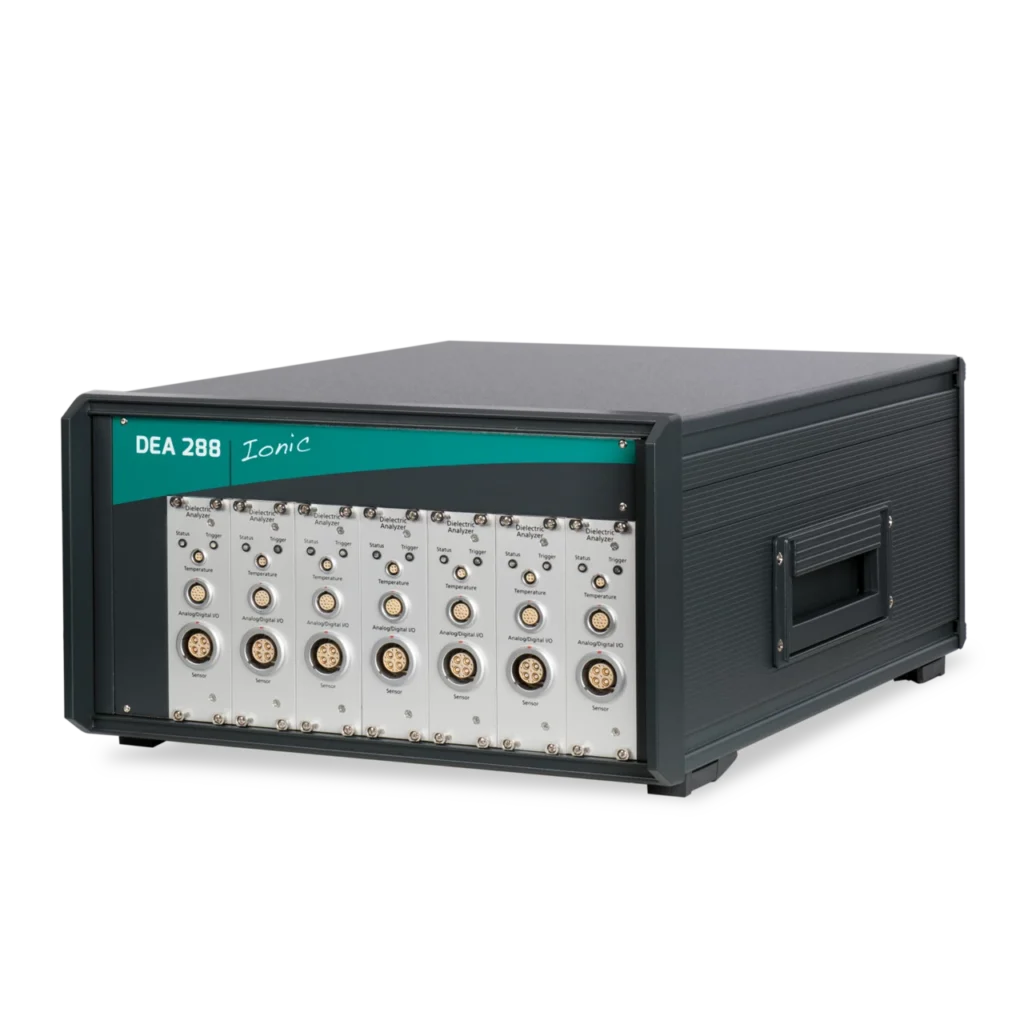
For measurement of the ion conductivity, which is calculated from the dielectric loss factor, or its reciprocal value, the ion viscosity, NETZSCH offers single- and multiple-channel DEA systems, depending on the application, which operate in various measurement and frequency ranges with different types of sensors.