Kinetics Neo
What Is Kinetics Neo Software
The kinetics, also called reaction kinetics or chemical kinetics, investigates the rates of chemical processesand allows for the determination of reaction rates. It also takes the factors that control these rates into consideration. Knowledge about points such as these can give deep insight into the detailed molecular mechanisms behind elementary reactions.
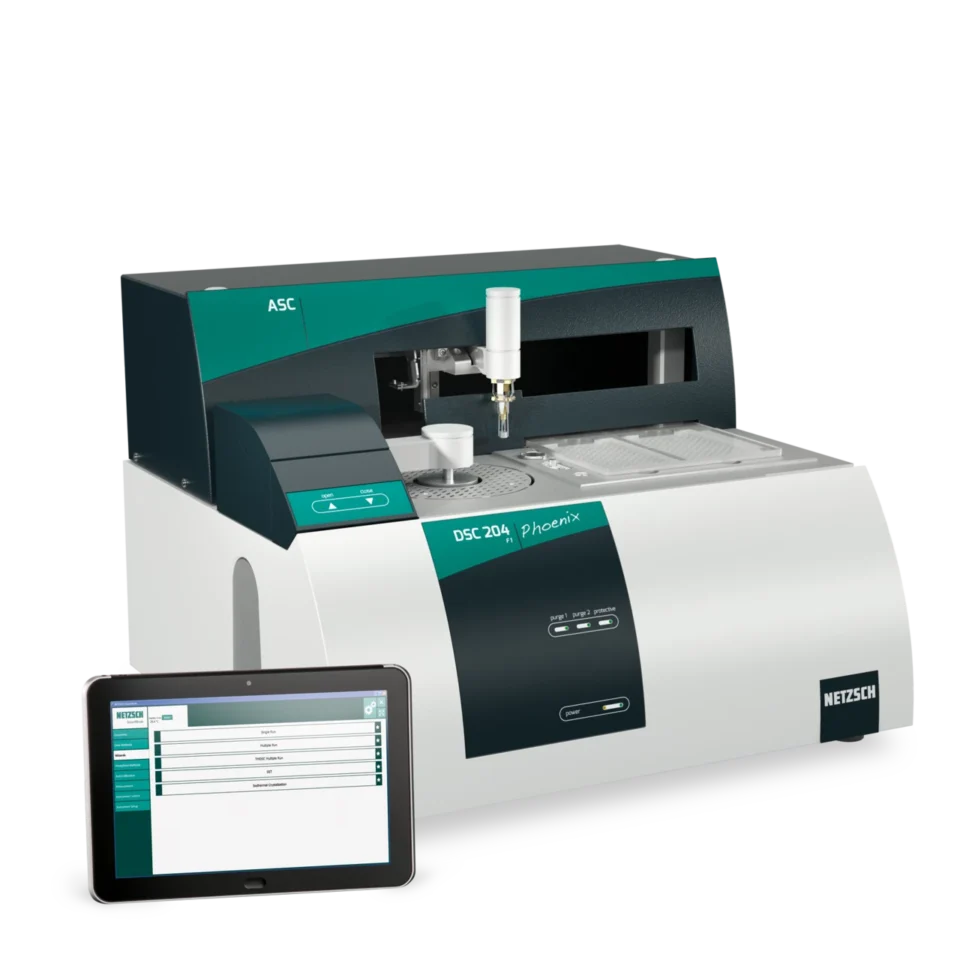
NETZSCH Kinetics Neo software is used to analyze chemical processes. The software allows for the analysis of temperature-dependent processes. The result of such analysis is a kinetics model or method correctly describing experimental data under different temperature conditions. Use of the model allows for predictions of a chemical system’s behavior under user-defined temperature conditions. Alternatively, such models can be used for process optimization.
The software can analyze different types of thermal curves that depict the changes in a given material property measured during a process. Potential data sources include studies using Differential Scanning Calorimetry (DSC), Thermogravimetry (TGA), Dilatometry (DIL), Dielectric Analysis (DEA), Accelerating Rate Calorimetry (ARC), Rheology and Viscosity (Torque).